Concepts in the Public Domain

By Connor Dillingham


We’ve discussed many works of fiction that are available in the public domain, which have mainly been novels. However, while we have discussed stories that are in the public domain, what we have not discussed concepts that are in the public domain. Now, this can be a very broad description, as pretty much everything that isn’t copyrighted can be public domain; swords, cars aliens, ect. So, for simplicity, I will be discussing fantastical concepts that exist within the public domain, concepts that can only exist in fiction.
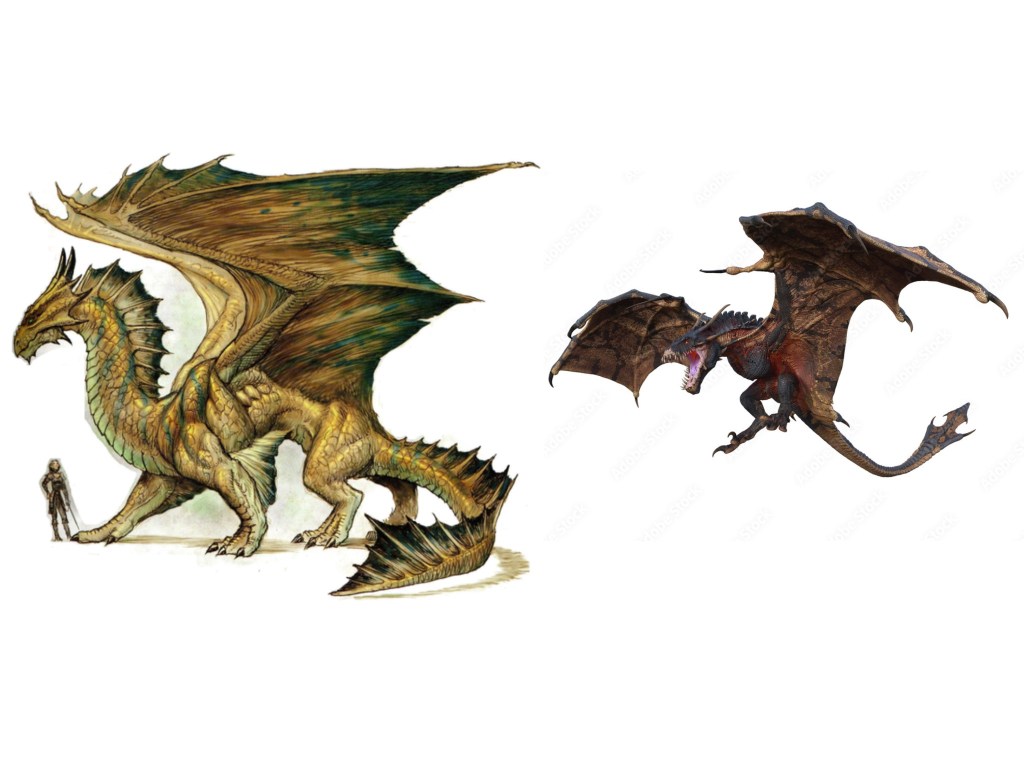
A dragon and a wyvern, two very simple fantastical creatures in the Public Domain that creators often confuse with each other.

And there are many of these types of concepts. One would be various fantasy species that exist in a lot of speculative fiction: vampires, werewolves, dragons, ect. These creatures exist in many fantasy stories across several mediums, and even a few science fiction ones that are creative with the concept. These creatures have often been depicted similar in many works, vampires are often being depicted as being burned by the sun, werewolves can only emerge during the full moon, and dragons are winged reptiles capable of breathing fire. However, each individual Work can often show put their own spin on the the creature. For example, in most media, dragons are depicted with six limbs; front legs, back legs, and a pair of wings. However, a good number of of works, such as the popular series Game of thrones, depict dragons as only having four limbs, back limbs and a pair of wings, making their dragons more like wyverns. Now, there isn’t a wrong way to depict fantastical creatures, but this does show how different works can interpret public domain concepts differently.

Another public domain species that pretty much anyone can use, are werewolves. One of the biggest differences that werewolves have that help make them stand out from other fantasy species is that werewolves have rules. These rules are ones that pretty much everyone is at least somewhat familiar with: werewolves are people that can transform into wolves, they can only transform under a fill moon, and they can only be killed by silver. However, these rules can be interpreted differently by creators, or even disregarded all together. For example, while werewolves are people that can transform into wolves, what their wolf form looks like can differ from each interpretation. Sometimes werewolves can look bipedalism half-man, half wolves, sometimes they can look like a man completely covered in fur, and sometimes they can just look like an an extremely large, normal looking wolf. It all depends on what the creator wants to do with them.

However, what about when someone creates a concept for their own work, and then puts that concept in the public domain with the specific goal that other writers will use it in their work? That is the case with Retrosaurs. For the probably many of you that don’t, Retrosaurs are a fictional species of monsters that were like if dinosaurs evolved from crocodiles instead of birds, and are based around many outdated theories and misunderstandings that scientists and people once once had of dinosaurs. Some of these theories include that dinosaurs stood up straight, dragging their tails, and that pterosaurs and prehistoric marine reptiles, such plesiosaurs and mosasaurs, actually dinosaurs and not only distantly related to them. Retrosaurs were originally created by William David Cope for his novel Tyrantis Walks Among Us, and were created due to what we know of dinosaurs constantly changing as scientist make new discoveries, and thus making depictions of dinosaurs made before the discovery outdated.

These are just a few of the concepts that are in the public domain. Keep in mind, that I have only talked about creatures that can exit in fantastical works, when there are so much more that can exist in the public domain, such as swords, wizards, sorcerers, mechs, starships, and so much more. The limits for concepts that you can use from the public domain are almost endless.

References
Knowing What’s Public Domain

By Connor Dillingham

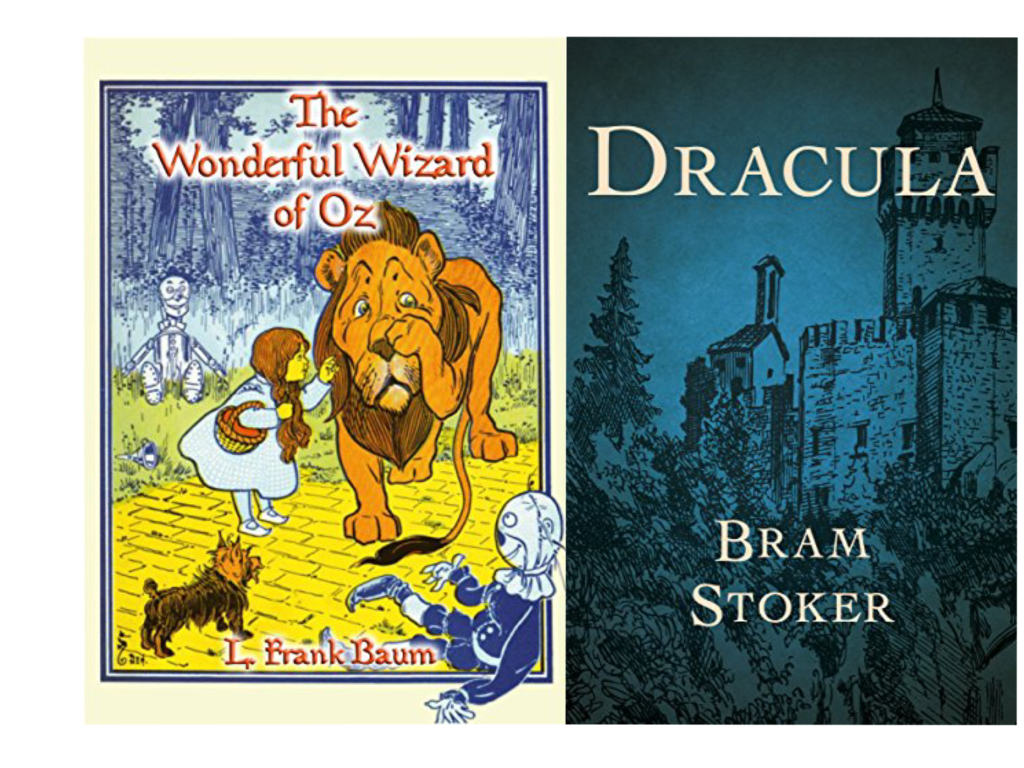
The Wizard of Oz and Dracula, two of the most well known and influential works in the Public Domain.

There are many works that are in the public domain. And as a result, there are many more works that use the public domain to tell their own story. However, while on the surface it many seem easy to know what is and isn’t in public domain, it can become difficult to tell when copyrighted works that use the public domain, or are at least adaptations of works that would become public domain, overshadow their source material. When a famous work like this does appear, people can often think the changes made in these are in the public domain, when in fact they are in the copyrighted work.

            One example that has been listed on this blog before, is the the 1939 adaptation of The Wizard of Oz. In the film, the shoes depicted are ruby. However, in the original novels, they are silver. This can be confusing for any creators that want to put their own spin on the story, as they may wish to include the more iconic versions of the shoes. However, there are works that have paid homage to the ruby slippers, while still not infringing copyright. In the short-lived tv adaptation of Oz, Emerald City, instead of having the silver shoes, in their place are the ruby gloves. The red gloves fill the same role as the silver slippers, and are a tribute to the more iconic ruby slippers. However, since they are technically an original creation, they aren’t infringing on copyright. Another example of this is in the Dorothy Must Die novel series by Danielle Paige. However, instead of making an entirely new creation like the red gloves, Dorothy Must Die instead has actual Red Shoes. However, while these red shoes are similar in appearance to the copyrighted ruby slippers in the film, they are far different in role in the book series. In the Dorothy Must Die series, the silver shoes also exist, and the red shoes are presented as a dark counterpart of them, corrupting Dorothy to become a tyrant. So, while the red shoes are more similar to the ruby slippers, they are, like the red gloves, still a homage, as they add something new to the idea and don’t simply rip it off.

            A more tricky example of a public domain work being overshadowed by a film adaptation would have to be Dracula. The original Dracula novel is public domain, as the author Bram Stroker did not register the book for copyright. However, like Oz, the original work is under the shadow of a much more well known copyrighted work; the 1931 Dracula adaptation by Universal. Like all adaptations, there are differences between the two works. However, the differences between the source material and the adaptation are a bit more extreme. One example would be of the title character himself. The Dracula of the film is protracted by the at the time 31 Dwight Frye, which is probably the most iconic portrayal of the character. However, in the original books, Dracula’s portrayal is very different. Instead, the famous vampire is portrayed as old, with white hair and a mustache, and disgusting.

However, if you’ve noticed, most works that use the vampire lord often take more inspiration from the film version, if not outright using an almost exact copy as the original. These works can often ovoid copyright by putting their on spin on the interpretation, such as Hotel Transylvania being a more comedic homage of the character. The best thing to keep if you want to use an idea of a work that is public domain, but are unsure said idea is public domain, it to homage that idea. That means that when you use the idea, you should add something new to it, which will make you interpretation of the idea unique and your own.

References

https://www.newmediarights.org/business_models/artist/wizard_oz_public_domain

http://flashbackuniverse.blogspot.com/2015/08/is-dracula-in-public-domain.html

Public Domain Introduction

By Connor Dillingham

The logo for the Public Domain.

The Public Domain is an an interesting concept. The public domain refers to creative materials that are not protected by intellectual property laws such as copyright, trademark, or patent laws. The public owns these works, not an individual author or artist. Anyone can use a public domain work without obtaining permission, but no one can ever own it. And often times, these works are pieces of fiction.

            Many stories have entered the public domain over the years. Some are because they existed before copyright laws existed, such as the myths of various mythologies and the Brothers Grimm fairy tales. Some because the authors weren’t able to properly copyright their works, such as H. P. Lovecraft, creator of the Cthulhu Mythos. And sometimes, the copyright for a work simply expired, allowing it to enter into the public domain, such as with L. Frank Baum, author of the Wizard of Oz. This is the case with Winnie-the-Pooh, which as recently entered the public domain, which allowed the film Winnie-the-Pooh: Blood and Honey, a Horror reimagining of the children’s story to exist.

            Winnie-the-Pooh isn’t the only work to enter the public domain recently. Some of these works are The Great Gatsby by F. Scott Fitzgerald, An American Tragedy by Theodore Dreiser, A Daughter of a Samurai by Etsu Inagaki Sugimoto, and many others. These works can be a great tool for future writers to tell stories, as they can make different retellings of these tales that are still unique enough to stand on their own. They can also be used to tell versions of the stories that can really show what you can do with the public domain, such as the aforementioned Winnie-the-Pooh: Blood and Honey, which reimagines the yellow, honey loving bear and his friend as murderous slashers(admittedly not the most original idea in the grand scheme of things, but it does show how one can use the public domain in unique ways).

There are several works that often adapt public domain stories and become more famous than than the original work itself. And while the source material is public domain, and thus can be used by any creator in any way they wish, these more famous adaptations are not. For example, in the famous 1939 adaptation of The Wizard of Oz, Dorothy Gale’s Ruby Slippers that she uses to get home are, of course, red. However, in the original novel, they are silver. This change was done to take show off the new Technicolor film process of the time. However, since the film adaptation is more iconic than the source material, this change may prove more challenging for creators in the long run. For while the original Silver Shoes are in the public domain, their more iconic film counterpart, the Ruby Slippers, are owned by Warner Bros. In fact, when Disney made the 1985 film, Return to Oz, they had to pay Warner Bros. royalties to use the Ruby Slippers in their film, due to being more iconic than the Silver Shoes. SO it’s important to know what is public domain, and what is a recent creation, as that can be the difference for a lawsuit for any potential creator.

References

Welcome to the Public Domain. Stanford Libraries. https://fairuse.stanford.edu/overview/public-domain/welcome/

Di Placido, Dani. (August 31, 2022). ‘Winnie The Pooh: Blood And Honey’ Shows The Power Of The Public Domain. Forbes. https://www.forbes.com/sites/danidiplacido/2022/08/31/winnie-the-pooh-blood-and-honey-shows-the-power-of-the-public-domain/?sh=24d0d05c6c39

Hill, Nicole. (January 6, 2021). Books Entering Public Domain in 2021. Book Riot  https://bookriot.com/public-domain-books-2021/

Design a site like this with WordPress.com
Get started