By Connor Dillingham
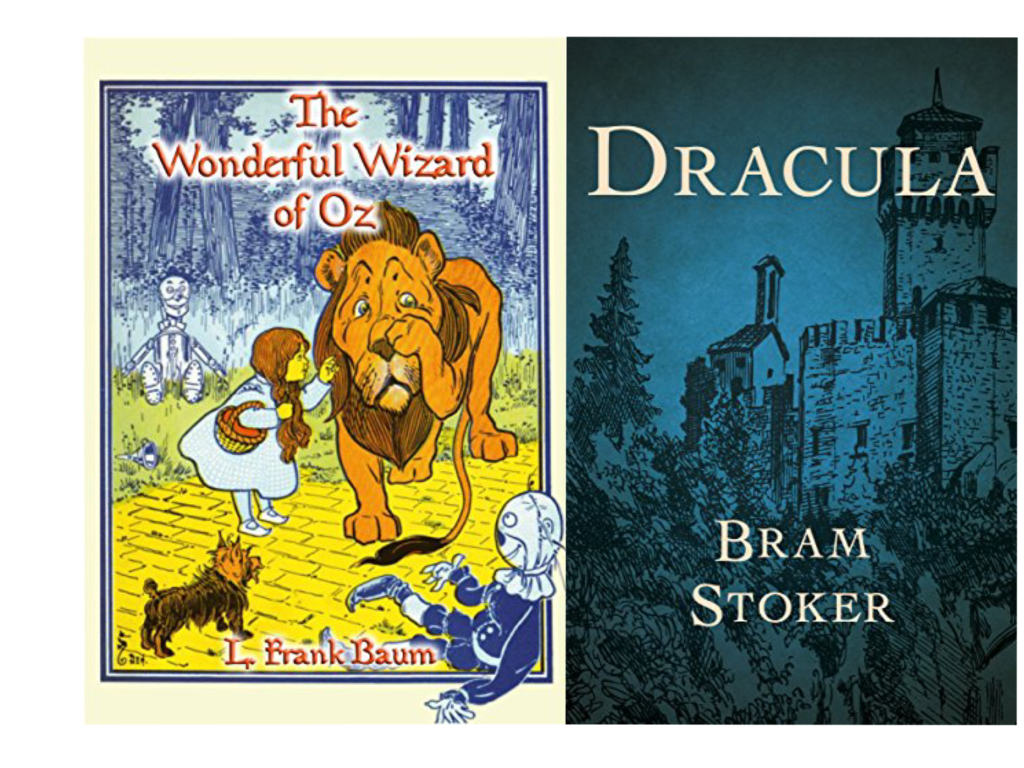
There are many works that are in the public domain. And as a result, there are many more works that use the public domain to tell their own story. However, while on the surface it many seem easy to know what is and isn’t in public domain, it can become difficult to tell when copyrighted works that use the public domain, or are at least adaptations of works that would become public domain, overshadow their source material. When a famous work like this does appear, people can often think the changes made in these are in the public domain, when in fact they are in the copyrighted work.
One example that has been listed on this blog before, is the the 1939 adaptation of The Wizard of Oz. In the film, the shoes depicted are ruby. However, in the original novels, they are silver. This can be confusing for any creators that want to put their own spin on the story, as they may wish to include the more iconic versions of the shoes. However, there are works that have paid homage to the ruby slippers, while still not infringing copyright. In the short-lived tv adaptation of Oz, Emerald City, instead of having the silver shoes, in their place are the ruby gloves. The red gloves fill the same role as the silver slippers, and are a tribute to the more iconic ruby slippers. However, since they are technically an original creation, they aren’t infringing on copyright. Another example of this is in the Dorothy Must Die novel series by Danielle Paige. However, instead of making an entirely new creation like the red gloves, Dorothy Must Die instead has actual Red Shoes. However, while these red shoes are similar in appearance to the copyrighted ruby slippers in the film, they are far different in role in the book series. In the Dorothy Must Die series, the silver shoes also exist, and the red shoes are presented as a dark counterpart of them, corrupting Dorothy to become a tyrant. So, while the red shoes are more similar to the ruby slippers, they are, like the red gloves, still a homage, as they add something new to the idea and don’t simply rip it off.
A more tricky example of a public domain work being overshadowed by a film adaptation would have to be Dracula. The original Dracula novel is public domain, as the author Bram Stroker did not register the book for copyright. However, like Oz, the original work is under the shadow of a much more well known copyrighted work; the 1931 Dracula adaptation by Universal. Like all adaptations, there are differences between the two works. However, the differences between the source material and the adaptation are a bit more extreme. One example would be of the title character himself. The Dracula of the film is protracted by the at the time 31 Dwight Frye, which is probably the most iconic portrayal of the character. However, in the original books, Dracula’s portrayal is very different. Instead, the famous vampire is portrayed as old, with white hair and a mustache, and disgusting.
However, if you’ve noticed, most works that use the vampire lord often take more inspiration from the film version, if not outright using an almost exact copy as the original. These works can often ovoid copyright by putting their on spin on the interpretation, such as Hotel Transylvania being a more comedic homage of the character. The best thing to keep if you want to use an idea of a work that is public domain, but are unsure said idea is public domain, it to homage that idea. That means that when you use the idea, you should add something new to it, which will make you interpretation of the idea unique and your own.
References
https://www.newmediarights.org/business_models/artist/wizard_oz_public_domain
http://flashbackuniverse.blogspot.com/2015/08/is-dracula-in-public-domain.html
 Site Title